
CARI CASTAGNI
Chestnut trees
Because this tree has shaped the lifestyles of many peasant populations for centuries, it has been referred to as the "chestnut civilization".
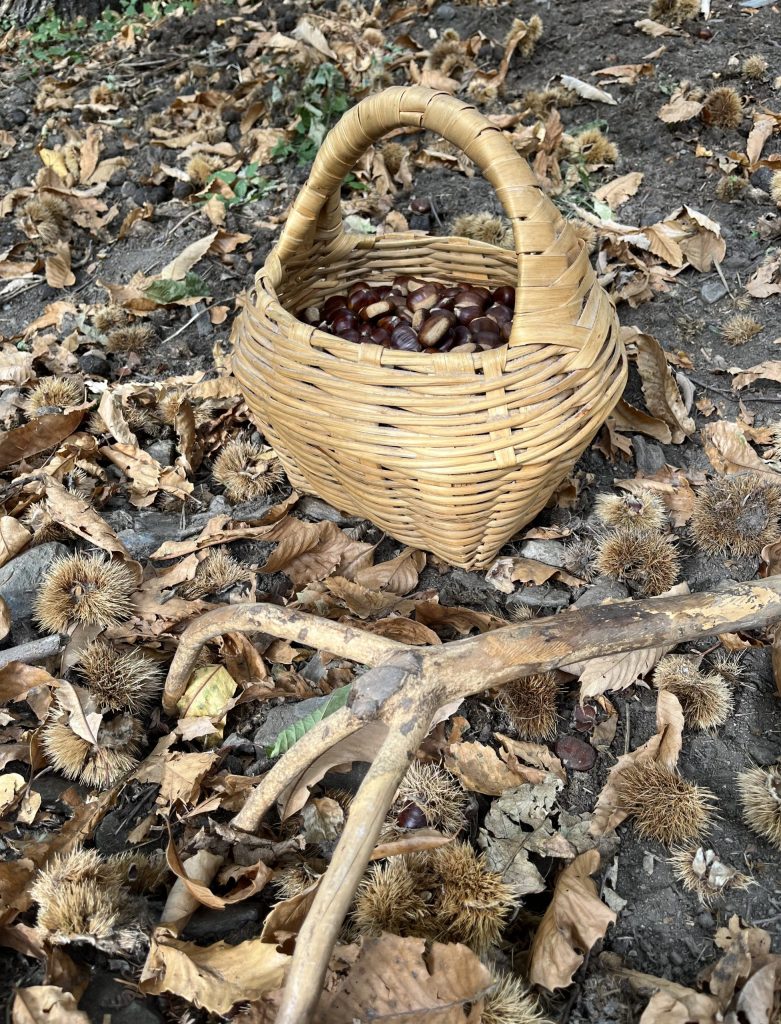
CASTAGNICCIA
In Corsica, and particularly in the Orezza valley where I come from, it's obvious to say that chestnut trees represent a fundamental part of our heritage.
For centuries, these majestic trees have permeated the lives of our village communities and are true cultural markers.
Until the middle of the 20th century, food, crafts, landscapes and even our imaginations revolved around the chestnut tree. It's because our links are so deep, because our destinies are so intertwined, that today we must care for our trees and pay tribute to them.
A CASTAGNA IN CORSICA
Chestnut cultivation began to develop in Corsica in the 12th century.
Governed by Pisa between 1077 and 1299, the island began to incorporate Tuscan agricultural techniques. With Genoa's conquest of the island, from the 16th century onwards, castaneiculture underwent a new boom. An ordinance dated August 28, 1548 required landowners to "plant four fruit trees each year - fig, olive, mulberry and chestnut", on pain of paying a fine of 3 pounds for each tree not planted.
On November 12, 1619, a new ordinance obliged each landowner to plant at least ten trees. On December 2, 1626, an order was issued to sow a hundred chestnuts in each of the island's noble districts, with the resulting plants to be replanted in favorable soils. Twenty years later, a final order was issued on January 25, 1646 to plant ten chestnut trees before the end of May - with the explicit stipulation that these nurseries be protected from livestock.
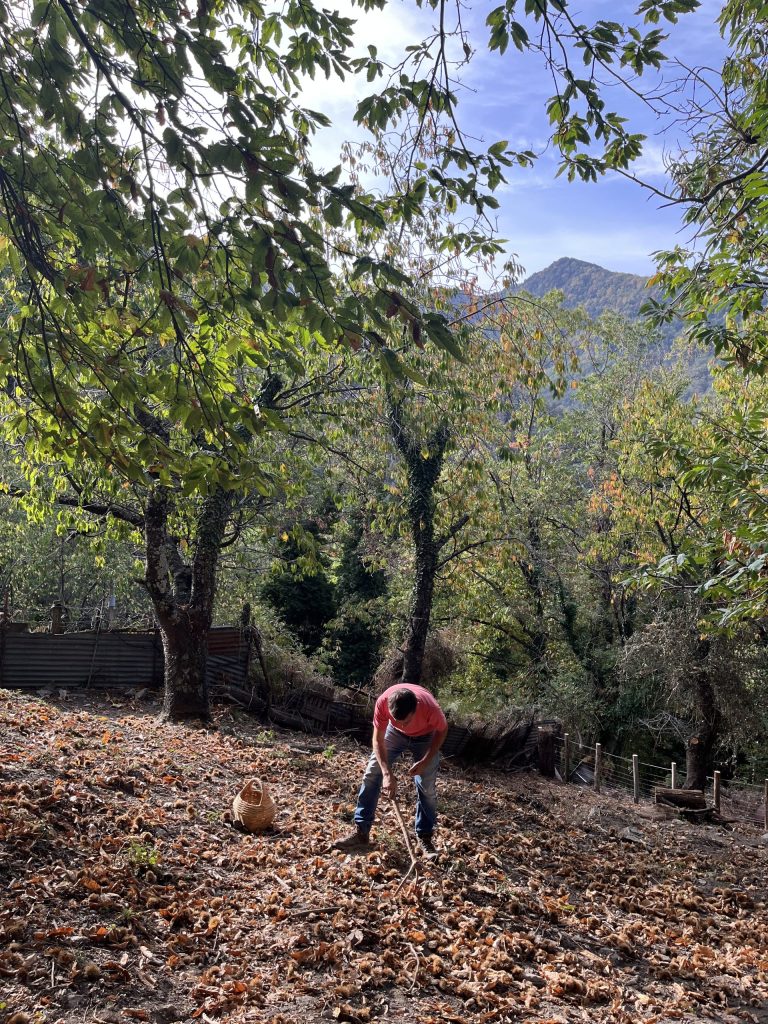
It's in the northern massif of the island that chestnut trees find the most favorable natural conditions for their expansion, and populations are gradually able to do without cereals that are too expensive and often imported. This is how the region came to be known as Castagniccia.
At one time, there were 35,000 hectares of chestnut groves in Corsica, but today there are only around 12,000 hectares, and only a little over 1,000 hectares are still farmed. It has to be said that the rural exodus, the industrial exploitation of tannins and the rise of the consumer society have all contributed to the decline... The famous Lamentu di u Castagnu Paoli di Tagliu brilliantly expressed this desolation in the early 20th century.
Today, disease and global warming are the worst threats, but there are still forces at work to give our Corsican chestnut groves a future.
CHESTNUT ALL OVER THE WORLD
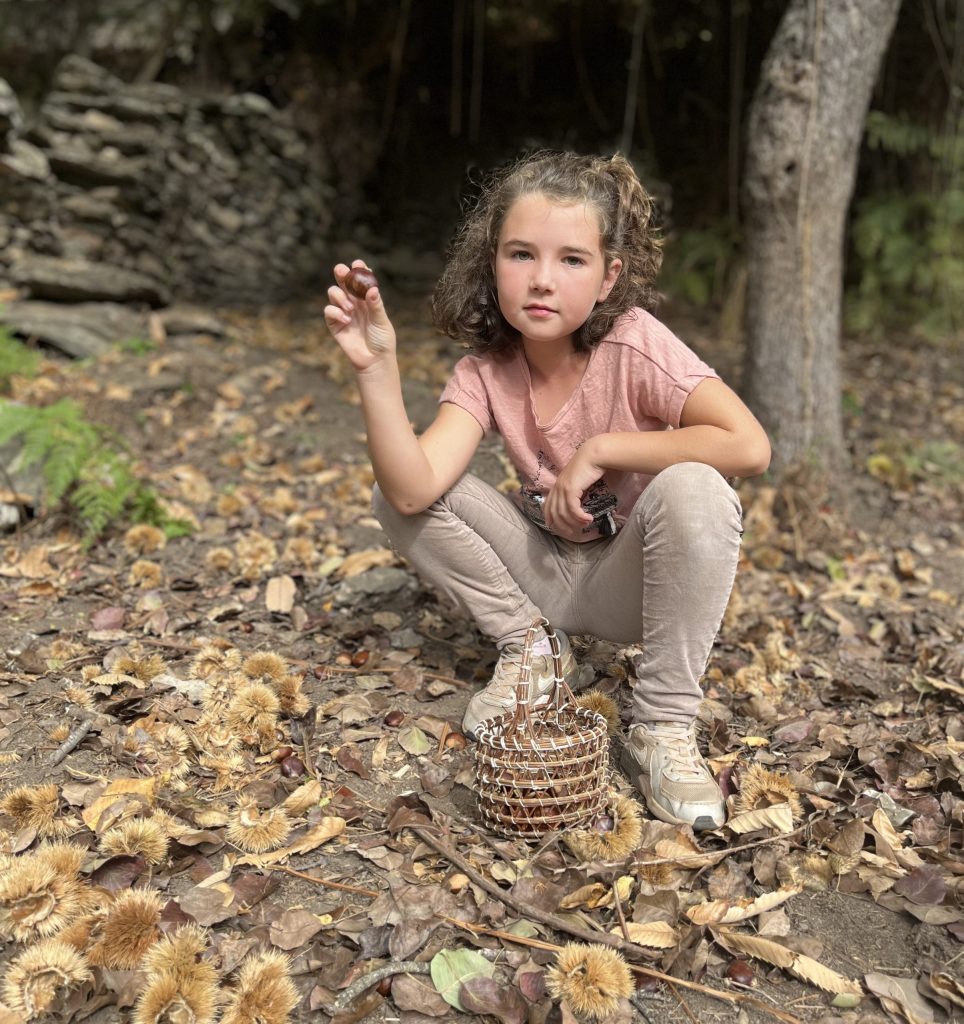
Chestnuts are harvested all over the world and come in three different varieties:
American chestnuts (Castanea Dentata), Japanese chestnuts (Castanea Crenata) and European chestnuts (Castanea Sativa) are all edible and have been feeding people for centuries.
Most people are unaware of the vast geography of the chestnut. Did you know, for example, that France is only the world's 10th largest chestnut producer, with some 8,000 tonnes? Well behind China (almost 2 million tonnes), Turkey (63,000 tonnes), Greece (63,000 tonnes), South Korea (52,000 tonnes), Italy (52,000 tonnes), Portugal (30,000 tonnes), Japan (19,000 tonnes), Spain (18,000 tonnes), North Korea (12,000 tonnes)...
And of course, as in Corsica, if chestnuts are cultivated as food, they also nourish the imaginations of all those peoples who have never ceased to celebrate them. From the haikus of the Japanese poet Basho to the frenzied poems of Chile's Pablo Neruda, from medieval illuminations to the still lifes of Chardin and Van Gogh, chestnuts are everywhere, modestly glorified.
POETICS AND POLITICS OF THE CHESTNUT
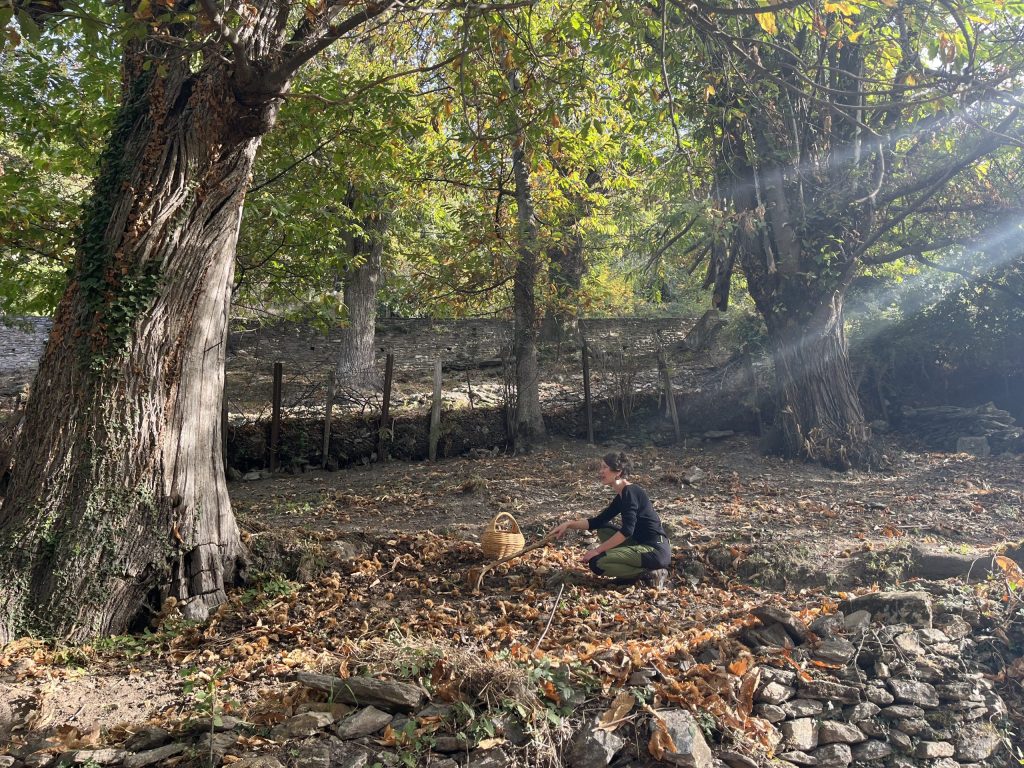
Today, I'm learning to look after a few chestnut trees in the village.
Yes, they may be over 300 years old, but they still need care. And they offer us so much in return... There's their fruit, of course, but also their leaves, their flowers, their bugs, their offspring...
So many elements to compose and recompose in a landart workshop with my daughters or other children.
These are the inspirations that have led many artists and writers around the world to celebrate the chestnut - its beauty and generosity.
So many ways to resist deculturation, oblivion and the death of the chestnut grove and the peasant and solidarity-based way of life it has given rise to.
 French
  English
  Italian